| |
|
|
| |
|
SOUTH AFRICA
WINS 2010 WORLD CUP AND BECOMES PLAN B FOR
FUTURE FIFA WORLD CUPS |
|
|
The best
compliment
that
FIFA
could
pay
South
Africa
is the
declaration
by
Jerome
Valcke,
FIFA
Secretary-General,
two
weeks
ago that
“South
Africa
will
always
be a
Plan B
for any
World
Cup”,
reports
AFP,
and an
amazing
compliment
to the
Local
Organising
Committee
(LOC),
as well
as to
South
Africans
across
the
board,
in
organising
the best
“party”
in the
world
and
showing
the
“gees”
of our
nation
to our
visitors
and to
our
fellow
countrymen.
FIFA
praised
the
country
for what
it
believes
will
have
been a
”perfect”
World
Cup. “If
on July
11, we
are on
the same
level as
we are
today (3
weeks
ago), I
would
say it’s
a
perfect
World
Cup”, he
said.
Initial
transport
problems
led to
empty
seats at
the
Opening
Match in
Johannesburg
on 11
June,
but
these
problems
were
quickly
ironed
out.
The
World
Cup has
made
South
Africa
and the
continent
of
Africa
“sexy”.
At the
TIME
and
CNN
Global
Forum,
which
was held
in Cape
Town two
weeks
ago, and
was
attended
by a
large
number
of the
world’s
global
business
leaders,
South
Africa’s
smooth
hosting
of the
World
Cup had
changed
perceptions
about
the
country
and the
continent,
speakers
said,
reports
The
Sunday
Independent.
TIME
editor
Michael
Elliot
said
that the
country
is
riding
an
“extraordinary
wave of
energy
and
optimism”,
and
stated
that
South
Africa
is “on
the
verge of
tremendous
opportunity”.
So how
has
South
Africa
benefited
from the
World
Cup? The
benefits
have
been
financial
and
emotional:
1. A
legacy
of
infrastructure
- I
disliked
the word
“legacy”
initially,
when I
heard
politicians
justify
the
billions
of Rands
to be
spent,
but now
that
legacy
is
concrete,
with ten
new or
upgraded
stadiums
around
the
country,
fantastic
roadworks
leading
into
Host
Cities,
and
around
the
stadiums,
airports
of an
international
standard
(almost
all,
given
the
embarrassing
fiasco
at King
Shaka
airport
in
Durban),
a
Gautrain
in
Johannesburg
and a
modernised
train
station
in Cape
Town,
new
modern
buses,
upgraded
city
pavements,
city
greening
and new
city
artwork
to
beautify
the Fan
Walks. |
 |
 |
2. The
“gees” Ke Nako that was the
theme of the World Cup grew
throughout the World Cup
into an unheard of spirit of
national pride, surpassing
that of the Rugby World Cup
in 1995. The nation-building
power of sport, first
through the rugby match
between the Stormers and the
Blue Bulls in the Orlando
Stadium, and the powerful
bonding of South Africans in
supporting the Bafana Bafana
team, as well as them
demonstrating the pride in
their country via mirror
socks, flags on the cars,
and flags on their homes and
businesses, has been one of
the most wonderful benefits
of the World Cup, and is
likely to last well beyond
the end of the World Cup. For
the
first
time the
country
became
proud
citizens
of their
continent
too, in
supporting
“BaGhana BaGhana”,
when
they
were the
final
African
team to
play in
the
tournament.
Many
South
|
Africans
doubted
their
nation’s
ability
to host
an event
of this
magnitude
across
nine
different
locations
around
the
large
country,
but she
has done
her
country
proud.
Locals
are
already
calling
for a
regular
way of
displaying
unity,
by
putting
up
flags,
wearing
the Bafana
Bafana
colours,
or those
of our
country’s
flag.
3. The
improvement
in South
Africa’s
image
world-wide
is the
best
legacy
of all,
and
perhaps
we
needed
to hear
bluntly
at the
start of
the
World
Cup how
dimly we
were
viewed
by the
world.
Whilst
we hated
her
broadcasts,
Emma
Hurd of
SkyNews
was the
wet
blanket
that
reminded
us day
in and
day out
about
how
dreadful
life can
be for
many of
our
citizens,
but even
then the
TV
station
changed
its
tune,
its
broadcasts
became
more and
more
positive,
and Ms
Hurd’s
focus
moved
more to
the
soccer
and less
on the
social
imbalances.
Maybe it
was a
blessing
that
England
fell out
of the
tournament
so early
on,
which
led to
less
interest
in the
World
Cup
reporting
by the
station.
Reporter
after
reporter
has
written
about
how they
feared
coming
to the
country,
having
heard
about
its
reputation
of
crime,
AIDS,
poverty,
and even
apartheid,
but all
wrote
about
how
pleasantly
surprised
they
were
about
the
spirited
and
united
nation
they
saw, and
about
the
first
class
facilities
they
encountered.
Not only
South
Africa
but
Africa
benefited
in
image,
as
written
above
already.
Africa
has been
the
step-child
of the
world,
and it
was the
“social
responsibility
” of the
world,
and FIFA
in
particular,
that saw
South
Africa
awarded
the
rights
to
hosting
the 2010
World
Cup - a
tremendous
leap in
faith
for the
body at
the
time,
but a
dividend
that has
paid off
richly
for FIFA
President
Sepp
Blatter
and his
team,
not just
in terms
of their
revenue
earned,
but also
in their
image
for
having
the
faith
and in
sticking
behind
South
Africa,
denying
that
they
ever had
a Plan B
and a
Plan C.
4. The
control
over
crime
was a
surprise
even for
South
Africans.
The
cancellation
of the
contract
between
the FIFA
Local
Organising
Committee
and
Stallion
Security
at the
Cape
Town and
Durban
stadiums
was no
security
loss at
all, and
the
police
did an
outstanding
job in
handling
the
security
of the
stadiums,
as well
as of
the Host
Cities
in
general,
with
high
police
visibility,
and a
marked
reduction
in crime
in
general.
Western
Cape
Premier
Helen
Zille
told the
Cape
Town
Press
Club
that a
BBC
interviewer
had
expressed
his
surprise
to her
about
not
seeing
the
“expected
crime
wave”,
reports
the
Weekend
Argus.
Never
before
had such
visible
policing
been
seen,
not only
in and
around
the
stadiums,
but
generally
in city
streets
and in
shopping
malls.
One
wondered
where
they had
been
hidden
all
these
years,
and
hopes
they
will
remain.
South
Africa
was not
prepared
to
compromise
safety,
its
biggest
vulnerability,
and I
experienced
what I
first
thought
was a
crazy
safety
procedure
to have
my car
security-checked
at the
Green
Point
Traffic
Department,
with a
car
search,
a
sniffer
dog
search,
a search
underneath
the car,
and a
personal
security
check,
then a
blue
light
escort
into the
stadium.
Special
World
Cup law
courts
also
acted
immediately
on World
Cup-related
crimes,
and
meted
out
harsh
fines
and
penalties
for
theft
and
other
crimes,
and the
incident
of the
British
fan
entering
the
England
team
changing
room,
and the
subsequent
admission
of guilt
payment
by the
Sunday
Mirror
reporter
related
to this
matter,
attracted
varying
reaction
to the
harshness
of the
fines.
5.
Whilst
South
Africa
was
shunned
as a
“rip-off”
country
for its
cost of
flights,
accommodation,
transport
and
World
Cup
packages
prior to
the
World
Cup, due
to the
30 %
commission
add-on
by FIFA
hospitality
and
ticketing
agency
MATCH to
already
high
prices
of
flights,
accommodation
and
transport,
the
prices
of all
of these
aspects
of the
World
Cup
quickly
dropped
when
MATCH
cancelled
the bulk
of its
booked
rooms,
and SAA
cancelled
the
seats
MATCH
had
booked.
It was
unheard
of that
accommodation
rates
dropped
during a
world
event,
but
pricing
is about
supply
and
demand,
and the
lower
than
expected
demand
necessitated
the
decrease
in
rates,
which
did
increase
last-minute
bookings
to some
extent.
It was
gratifying
to see
soccer
fans
book
their
own
accommodation,
preferring
to book
more
reasonably
priced
guest
houses.
It is
hoped
that the
world
will
forget
its
initial
image of
our
country
in this
regard.
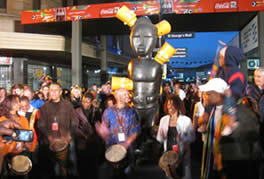
|
6. The
biggest
surprise
for
locals
was the
power
and fun
of the
Fan Walk
in Cape
Town. It
appeared
that
this may
have
been the
only
city in
South
Africa
to have
one.
Despite
one’s
scepticism
of the
concept
initially,
given
Cape
Town’s
winter
weather,
not even
rain
could
deter
ticket
holders
and even
towards
the end,
on a
sunny
afternoon,
Capetonians
without
tickets
from
walking
the
Walk.
The
flags
put up
everywhere
became a
trademark,
and made
Cape
Town
look
festive,
and one
hopes
they
will
stay,
and give
a
nostalgic
memory
of the
biggest
party
Cape
Town has
ever
experienced. |
7. South
Africa
has new
tourism
icons,
the very
beautifully
designed
stadiums
becoming
tourism
assets
in their
own
rights.
The
Soccer
City,
Durban,
Cape
Town and
Nelspruit
stadiums
in
particular
are
beautifully
designed.
Cape
Town had
a Big
Six it
marketed
- now it
has the
Big
Seven,
the Cape
Town
Stadium
added,
which
became
the
backdrop
to most
broadcasts
from the
city.
8. If it
has not
been
said
above,
the
interpersonal
tolerance
between
South
Africans
seems to
have
improved,
and
small
courtesies
towards
other
pedestrians,
motorists
and
shoppers
are
manifestations
of the
wonderful
spirit
of
“South
Africanism”.
9.
“White”
South
Africa
have
caught
the
soccer
spirit,
and the
majority
never
were
interested
in this
sport.
One
never
thought
that
locals
would
rush off
in such
large
numbers
to buy
their
match
tickets
online,
and to
queue
for
tickets
at FIFA
outlets
in Host
Cities,
even
camping
outside
the
doors
the
night
before.
More
than 3
million
tickets
were
sold,
and
about
two-thirds
went to
South
Africans.
We all
became
enraptured
with the
game,
and all
learnt
new
terminology
about
soccer
(although
most of
us still
do not
know if
it is
’soccer’
or
‘football”
that we
have
been
watching!).
We got
to know
the
names of
new
soccer
heroes -
Diego
Forlan,
Thomas
Mueller,
Bastian
Schweinsteiger,
Miroslav
Klose,
and many
more,
for
their
performance
on the
pitches. |
 |
10.
School
children
but also
adults
learnt
about
geography
in terms
of the
participating
nations,
so that
Serbia,
Slovenia,
Slovakia,
and the
South
American
countries
of
Uruguay
and
Paraguay
could be
placed.
Nestle
ran a
“Children
of the
World”
promotion,
with
information
about
different
participating
countries
on their
Smarties
boxes.
Hopefully
South
Africa
featured
on the
atlas of
children
and
residents
of the
world
community
whilst
they
watched
the many
matches
in the
past
month,
and saw
their
countries’
TV
stations
present
documentaries
about
our
country.
We have
got to
know the
flags of
participating
nations.
 |
11.
Musically,
life
will
never be
the
same,
the
vuvuzela
being
synonymous
with the
2010
World
Cup, and
will no
doubt be
the
“spirit
maker”
at
future
sporting
events
around
the
world.
Loved
and
hated,
the
“toot
toot”
during
broadcasts
and live
matches
were
part of
this
sporting
event.
FIFA
President
Blatter
refused
to have
it
banned,
when
called
upon to
do so by
the
world
media
and by
players,
who said
that
they
could
not hear
their
coaches
and the
referees.
The
world’s
largest
vuvuzela
was
erected
on the
unfinished
highway
for
World
Cup
sponsor
Hyundai.
Two
songs
will
go
down
in
World
Cup
history
-
“Waka Waka” by
Shakira,
much
scorned
when it
first
received
airplay
on
radio,
but now
synonymous
with the
event,
South
Africa,
and even
Africa -
as well
as
K’Naan’s
“Waving
Flags”. |
12. It
is the
future
tourism
legacy
that
will
hopefully
benefit
the
country,
in that
it will
attract
tourists
to our
country
in
future.
Due to
the
improvement
in South
Africa’s
image
and the
wonderful
documentaries
about
South
Africa
(for
example
German
TV
station
ZDF
dedicated
hours of
coverage
of South
Africa,
using
our
ex-Miss
South
Africa
Jo-Ann
Strauss,
speaking
her best
possible
German -
she is
engaged
to a
German),
one can
hope for
an
influx
of
tourists
for
years to
come,
but one
must be
realistic
about
the
depressed
economy
internationally,
and even
locally,
said our
Governor
of the
Reserve
Bank
Gill
Marcus
last
week.
13. If
there is
one name
we will
never
forget
in the
context
of the
World
Cup, it
is the
by now
well-known
Paul the
Octopus
from
Oberhausen
in
Germany,
who
correctly
predicted
5 wins
and 2
losses
for
Germany,
as well
as the
win for
Spain
against
the
Netherlands
in the
Final.
He even
has a
Twitter
page
http://twitter.com/PPsychicOctopus,
which
surpassed
500
Followers
in just
four
days. |
 |
14. The
media
coverage
for
South
Africa
has been
phenomenal,
many
countries
sending
media
representatives
not only
reporting
about
the
soccer
but also
doing
documentaries
about
the
cities
in which
they
were
based.
The
BBC
had a
special
Studio
built on
top of
the
Somerset
Hospital,
giving
it a
fantastic
view of
a
beautiful
Table
Mountain
on the
one
side,
and of
the
beautiful
Cape
Town
Stadium
on the
other
side. An
hour
after
the
Final
last
night,
ZDF
was
still
broadcasting
about
South
Africa
and the
World
Cup,
recapping
the
highlights
of the
sport
event
and of
the
country.
Even
normally
cynical
Oliver
Kahn,
who was
a
co-presenter,
praised
the
organisation,
hospitality,
friendliness
and lack
of
hooliganism
in our
host
country.
ZDF
probably
was the
TV
station
that
gave our
country
the
most,
and most
positive,
TV
coverage.
The
Final is
expected
to have
been
seen by
700
million
TV
viewers
around
the
world
last
night.
 |
15. The
power of
the
endorsement
in terms
of VIP
attendance
at the
matches
is
unmeasurable,
and
those
celebrities
that are
on
Twitter,
Paris
Hilton
and
Shakira
for
example,
who
expressed
their
delight,
spread
the word
even
further.
Nelson
Mandela
and his
wife
Graca
Machel,
Queen
Sofia of
Spain,
her son
Crown
Prince
Felipe
and his
wife
Letizia,
Holland’s
Crown
Prince
Willem
Alexander
and his
wife
Maxima,
Prince
Carl
Philip
of
Sweden,
Prince
Albert
of
Monaco
and
Charlene
Wittstock,
German
President
Christian
Wulff,
German
Chancellor
Angela
Merkel,
Brazilian
President
Luiz
Inacio
Luia da
Silva,
Charlize
Theron,
Morgan
Freeman,
Mick
Jagger,
Kimora
Lee
Simons,
Leonardo
DiCaprio,
Andrea
Bocelli,
Franz
Beckenbauer,
injured
ex-German
captain
Michael
Ballack,
Bill
Clinton,
David
Beckham,
will.i.am
and the
Black
Eyed
Peas,
Naomi
Campbell,
Princes
William
and
Harry,
London
Mayor
Boris
Johnson
and many
more
attended
the
matches
over the
past
month. |
16.
Despite
the
winter
timing
of the
tournament,
Cape
Town and
Port
Elizabeth’s
weather
generally
played
ball.
Cape
Town had
three
rain
days
during
matches,
and
challenged
the
perception
of
Johannesburgers
that it
rains
all the
time.
17. The
smooth
logistical
running
of the
World
Cup has
opened
up the
country
to bid
for
other
events,
and the
2020
Olympics
is the
next
event
the
country
has been
invited
to bid
for. IOC
President
Jacques
Rogge
has been
in the
country
for more
than a
week,
and has
been
warmly
recommended
the
country
by his
friend
FIFA
President
Sepp
Blatter.
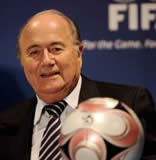 |
18.
Social
media
marketing
received
a
tremendous
boost
during
the
World
Cup, and
peaked
on 11
June,
the
start of
the
World
Cup.
Only one
event
challenged
interest
in the
early
part of
the
event,
being
the
engagement
of South
African
Charlene
Wittstock
to
Prince
Albert
of
Monaco.
As soon
as the
USA and
England
teams
were
eliminated,
web
traffic
fell
dramatically,
partly
though
due to
the
problems
with the
SEACOM
cable
for
those
websites
that are
hosted
overseas
by their
servers.
Yet
action
on
Twitter
never
let off,
and
whenever
a goal
was
scored,
Twitter
crashed.
Twitter
users
followed
soccer
stars
they had
not
previously
heard
of, and
even
Sepp
Blatter
opened a
Twitter
page
http://twitter.com/SeppBlatter. |
19. The
initial
high
airline
ticket
prices
encouraged
many
locals
as well
as
tourists
to drive
between
Cape
Town and
Port
Elizabeth,
and also
to other
parts of
the
country,
to save
on
costs,
thus
supporting
tourism
in
smaller
towns
and
cities
that
were not
Host
Cities.
One
hopes
that
this
will
lead to
a
rediscovery
of the
Garden
Route,
an area
that has
suffered
badly as
far as
tourism
goes in
the past
three
years.
20. One
can be
grateful
from a
business
perspective
that the
World
Cup did
take
place in
winter,
a
normally
quiet
period,
therefore
not
influencing
productivity,
or lack
of,
badly on
match
days,
and on
Bafana
Bafana
match
days
specifically,
which
saw
shops
and
businesses
close
early.
This is
compared
to many
companies
that
close
for
their
Christmas/New
Year
break,
when
Cape
Town is
at its
busiest.
21. The
surprise
benefits
of
coming
to the
country
for the
international
soccer
fans was
the
beauty
of the
country,
and in
Cape
Town the
fans
were
surprised
about
what
special
beauty
the city
offers -
the
mountains,
the sea,
the
wildlife
at Cape
Point,
and the
winelands.
|
22.
Soccer
fans
that
arrived
without
tickets
and
locals
enjoyed
the
“gees”
at the
Host
Cities’
Fan
Parks,
many
offering
top
notch
musical
entertainment
every
day, and
broadcasting
all
matches.
In early
days the
Fan Park
on the
Grand
Parade
had to
be
closed,
due to
over-capacity.
Other
fans
went
pub-hopping,
Long
Street
being
popular
for
this,
with
numerous
bars and
restaurants
with
televisions.
The V&A
Waterfront
was
another
popular
destination,
and
every
restaurant
agreed
to
install
TV sets
for the
duration
of the
World
Cup.
Paulaner
Brauhaus
and
other
hospitality
marquees
set up
at the
Clocktower
side of
the V&A
did
extremely
well,
and I
personally
queued
at the
Paulaner
Brauhaus
for as
long as
2 hours
for the
semi-final
between
Germany
and
Spain.
The law
of
supply
and
demand
forced
greedy
hospitality
marquee
owners
to
radically
reduce
their
entrance
fees,
where
these
were
charged,
from
over R
100 per
person,
to about
R 20. |
 |
23. FIFA
must be
congratulated
on their
determination
in
making
this an
excellent
World
Cup, and
were
based in
Johannesburg
for a
number
of
years,
to guide
the
management
of the
event.
It gave
us great
confidence
that the
event
would be
a
success,
even
though
so many
locals
were
sceptical.
FIFA
executives
were
also
ruthless
in their
deadlines
for the
completion
of the
stadiums,
and the
infrastructure,
which
was
excellent
in
making
everything
come
together,
even if
it felt
that
some
work was
very
much
last
minute.
FIFA
insisted
on the
police
presence
and the
instant
law
courts,
and they
have
dramatically
reduced
crime in
the past
four
weeks.
The
World
Cup has
not been
super-perfect,
and had
some
blemishes:
 |
1. I
have
written
copiously
about
MATCH,
FIFA’s
hospitality
and
ticketing
agency,
and its
ruthless
attempt
at
exploitation
of the
accommodation
industry,
which
unfortunately
backfired
badly
for the
agency,
for the
accommodation
industry
and for
the
image of
the
country
as far
as
affordability,
or lack
of,
goes.
2. Many
empty
seats
were
visible,
especially
in the
early
matches,
and were
attributed
to
transport
problems
in
Johannesburg
at the
first
match,
and to
sponsors
not
allocating
all
their
tickets. |
3. The
inability
and
thereafter
late
landing
of four
aircraft
at King
Shaka
airport
in
Durban
on the
day that
Germany
played
Spain
was the
biggest
logistical
blunder
of the
tournament,
and left
many
German
fans
angry
about
the
costs
they had
incurred
to see
the
match.
ACSA is
offering
a
reported
compensation
of R400
per
head!
4.
Restaurant
business
dropped
dramatically,
and fine
dining
establishments
that
refused
to
succumb
to TV
sets
lost
business
badly,
especially
on match
days in
their
cities.
Theatre
and
general
entertainment
also
suffered,
and the
popular
Jonny
Cooper
Orchestra
closed
down a
show in
Camps
Bay two
weeks
ahead of
schedule.
Retail
outlets
did not
gain
from the
World
Cup, and
the
opposite
probably
is true.
Sales of
the
Cape
Times
and
Cape
Argus
have
been
said by
its
management
to have
been the
worst
ever in
the past
four
weeks.
5. The
negative
media
reporting
focused
on only
one
theme -
the
great
divide
that
still
remains
in South
Africa,
between
haves
and
have-nots,
and the
irony of
the
monies
spent on
the
stadiums
relative
to the
lack of
proper
housing
for all
of its
population
will
have to
be
addressed.
One
hopes
that the
future
impact
on
tourism,
and
resultant
employment,
will
address
this
problem.
But it
will
also
mean a
new
attitude
by
employees
to value
their
jobs and
terms of
employment.
6. The
early
exit of
England
in
particular
was
damaging
to
tourism,
as
multitudes
of fans
were
standing
by to
fly to
South
Africa
to
support
their
team.
The
England
fans
were the
best for
accommodation
business,
but
their
bookings
were
linked
to their
team’s
playing
schedule.
7. The
biggest
loser of
the
World
Cup
probably
is FIFA
itself,
in terms
of its
image,
Sepp
Blatter
having
been
booed at
the
Final
and also
on
another
occasion.
FIFA
also
came
under
fire
about
its
card-happy
referees,
the
British
referee
Howard
Webb
setting
the
record
for the
highest
number
of
cards,
with 14
yellow
cards
and one
red card
during
the wild
Final
match.
The lack
of
technology
to check
on the
admissibility
of goals
was also
severely criticised.
8.
FIFA’s
technology
also
failed
when
demand
for
tickets
became
so
great,
that its
system
crashed
on
numerous
occasions,
a dent
to its
image of
perfection
and
organisation.
9. The
more
than 25
000
volunteers
that
were
appointed
by FIFA
and its
LOC,
were
poorly
utilised
in terms
of their
skills
and
day-job
capabilities
and were
extremely
poorly
managed.
They
were
“employed”
outside
of the
South
African
labour
legislation,
and had
to sign
for this
in their
contracts.
They had
tax
deducted
from
their
meal
allowances
when
these
were
paid
into
their
bank
accounts.
In Cape
Town
they
were
served
disgustingly
bad food
for
three
days,
and were
not
compensated
for it
in terms
of their
meal
allowances. They
did
not
all
receive
the
designated |
 |
volunteer
clothing,
even
though
it was
ordered
about 6
months
ago when
the
volunteers
were
appointed.
Volunteers
attended
three
days of
training
in April
plus a
morning
in May,
and were
not
compensated.
Huge
dissatisfaction
existed
about
the
forced
McDonald’s
diet of
R 60 per
day,
which
the LOC
would
not
alter at
all, the
most
unhealthy
food
they
could
have
been
fed. The
Green
Point
branch
next to
the
stadium
made a
fortune
out of
this
arrangement,
yet
their
service
and food
quality
was
shocking
- the
Volunteer
Co-ordinator
had to
call the
branch
regularly
with
complaints.
Volunteers
were
forced
to drink
Coke,
when
many
preferred
water,
Bonaqua
being a
Coca
Cola
brand
too.
Quotas
were set
for the
amount
of water
and Coke
that
each
volunteer
had to
receive.
The
Volunteer
Farewell
Function
last
week
started
two
hours
late,
was
badly
organised,
and
lunch
was
served
at
15h30,
1600
volunteers
having
to queue
- many
left at
this
stage.
More
than a
month
after
starting
to work
as
volunteers,
they
have not
yet been
paid,
despite
a
promise
that
they
would
be.
Sadly,
international
volunteers
left the
country
with an
image of
the
poorest
organisation
of a
World
Cup
relative
to their
experience
of the
2002 and
2006
World
Cups, a
shame
given
that one
third of
the
volunteers
were
from
other
countries
around
the
world,
and they
will
take
this
message
back
home
with
them. I
kept
hearing
them say
that
this
must be
“an
African
way” of
doing
things,
a
perception
I tried
to
correct
whenever
I heard
it.
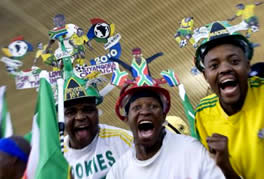
|
10. The
FIFA
sponsors
Budweiser,
McDonald’s
and Coca
Cola
were not
all
positively
received.
Budweiser
was only
served
inside
the
stadiums,
and
comments
via
Twitter
were
only
negative
about
the
beer.
McDonald’s
became a
swearword
amongst
the
volunteers,
and even
the
police
and
media
working
close to
the
Stadium
must
have
disliked
receiving
the poor
quality
and
service
for more
than a
month.
Coca
Cola
became
the butt
of jokes
about
Paris
Hilton
getting
the
brand
wrong
when she
was
wrongfully
arrested
for
smoking
marijuana.
The food
sold by
concessionaires
inside
the
Stadium
was
poor. |
11. FIFA
also
lost
face
when it
fanatically
reacted
to
ambush
marketing,
and the
Kulula.com
airline
provoked
FIFA in
its
newspaper
ads.
Bavaria
beer is
the best
known
brand in
South
Africa,
due to
FIFA’s
reaction
to the
Dutch
brewery’s
ambush
marketing
inside
the
stadium
in
Durban.
12.
Corruption
in terms
of
Government
departments
and
municipalities
buying
huge
allocations
of
tickets
has been
hinted
at, and
no doubt
further
such
claims
will be
written
about in
the
media.
|
13.
Whilst
the
occupancy
of
accommodation
establishments
in Host
Cities
close to
Stadiums
was
reasonable
in the
past 30
days
(Whale
Cottage
Camps
Bay at
71 %),
the
areas in
smaller
towns
barely
picked
up any
benefit
in this
period.
Sadly,
business
in May
was at
its
worst
ever,
and what
income
was made
in June,
was
offset
by the
“vacuum-effect”
of the
World
Cup in
May.
14.
Last,
but not
least,
is the
anti-climax
of the
month-long
party
having
come to
an end.
The
lives of
many
changed
in the
past
month,
with
different
habits,
glued to
television
sets,
children
on
holiday
for 5
weeks,
daily
beer
drinking
habits
having
been
developed,
and the
mundane
side of
life was
set
aside
for the
period.
Reality
strikes! |
 |
|
|
|
|
|
|
| |
|


